
De or het? Eight rules of thumb
Updated · TIT
Dutch has two words for 'the': de and het. No rule covers every noun, so in the end you learn each word with its article — but eight rules of thumb take you a long way, and tell you which way to guess when you're unsure.
1. About two out of three nouns take de
De is the common article: de tafel, de straat, de auto, de man, de vrouw. When in doubt, de is the safer guess.
2. All plurals take de
Whatever the singular, the plural is de: het huis → de huizen, het kind → de kinderen, het boek → de boeken.
3. All diminutives (ending in -je) take het
A diminutive is always het, even when the word it comes from is de: de man → het mannetje, de boom → het boompje, de tafel → het tafeltje. That's why it's het meisje, although it means 'girl'.
4. Verbs used as nouns take het
An infinitive used as a noun is het: het eten, het leven, het zwemmen. Het roken is hier verboden — smoking is not allowed here.
5. -ing, -heid, -tie, -teit, -ij, -nis: mostly de
de woning, de vrijheid, de informatie, de universiteit, de bakkerij, de gebeurtenis. Mostly, not always: het ding and het vonnis are exceptions.
6. -ment, -um, -isme: mostly het
het moment, het document, het museum, het centrum, het toerisme. An exception: de datum.
7. Many words starting with ge-, be-, ver- take het
het gesprek, het gebouw, het gevoel, het begin, het bedrag, het verhaal, het verkeer — as long as they don't end in -ing, which makes them de again: de vergadering, de betaling. Not every one follows: de gedachte.
8. Languages, metals and compass directions take het
het Nederlands, het Engels, het Chinees; het goud, het zilver, het ijzer; het noorden, het zuiden, het oosten, het westen.
Why it matters
The article isn't only about 'the'. It decides the adjective ending after een (een grote tafel, but een groot huis) and the word for 'this' and 'that': deze tafel, dit huis; die tafel, dat huis. Getting it wrong rarely blocks understanding, but it's one of the first things a reader notices in a letter or a writing exam.
Learning the rest
Many everyday words fit none of the rules — het huis, het boek, het jaar, het water — and simply have to be learned with their article. A compound takes the article of its last part, which helps with long words: het ziekenhuis (het huis), de voordeur (de deur).
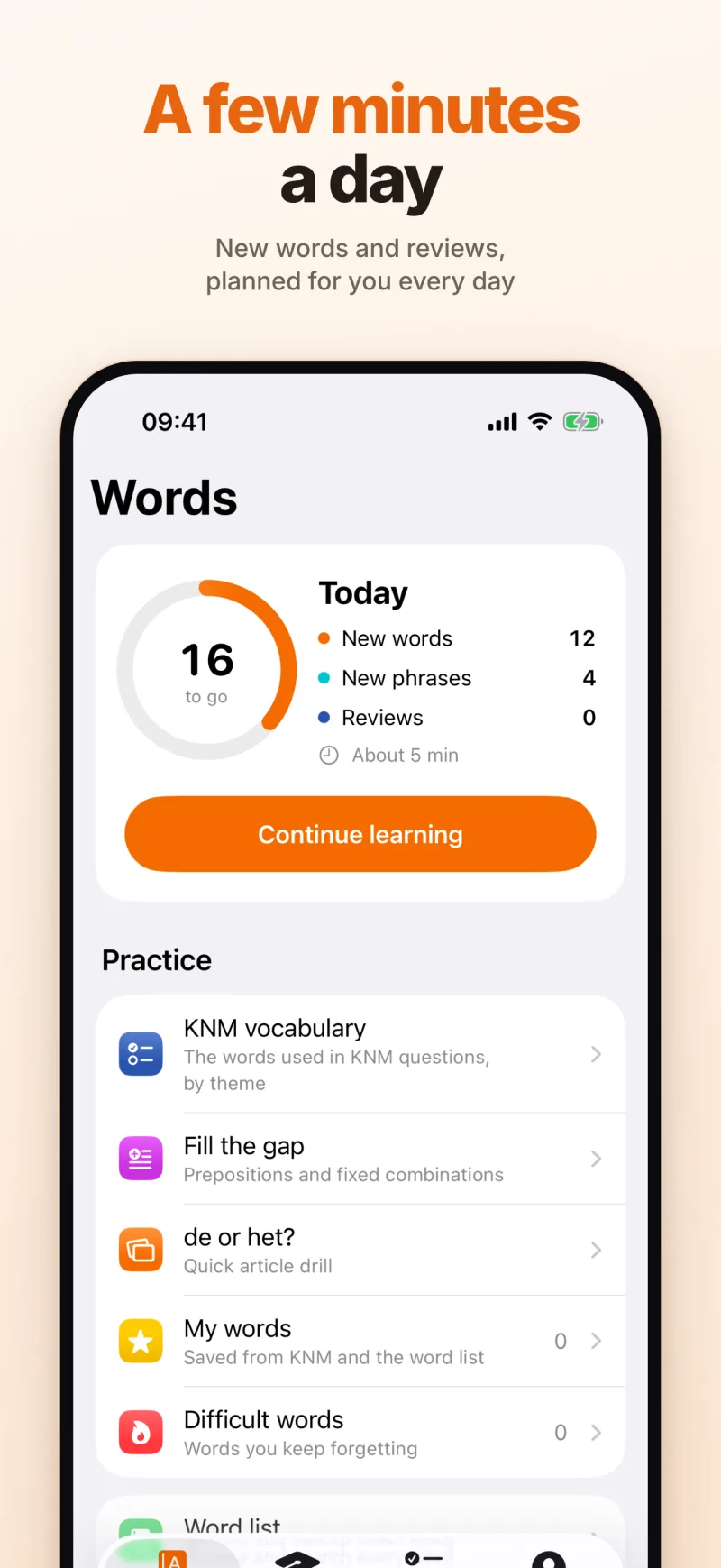
In Tulp every noun shows de or het in colour — orange for de, blue for het — so you see the article each time you review a word. The de/het drill asks de or het? for one noun after another, with these eight rules under Rules of thumb.
Frequently asked questions
Is there a rule that always works?
No. The rules of thumb cover large groups of nouns, but for many words you simply learn the article with the word — which is why Tulp always shows them together.
If I don't know, should I guess de or het?
De. About two out of three Dutch nouns take it, and every plural does.
Is it de or het meisje?
Het meisje. It ends in -je, a diminutive, and diminutives always take het — even though it means 'girl'.
What about compound words?
A compound takes the article of its last part: het ziekenhuis (het huis), de voordeur (de deur), de huisarts (de arts).